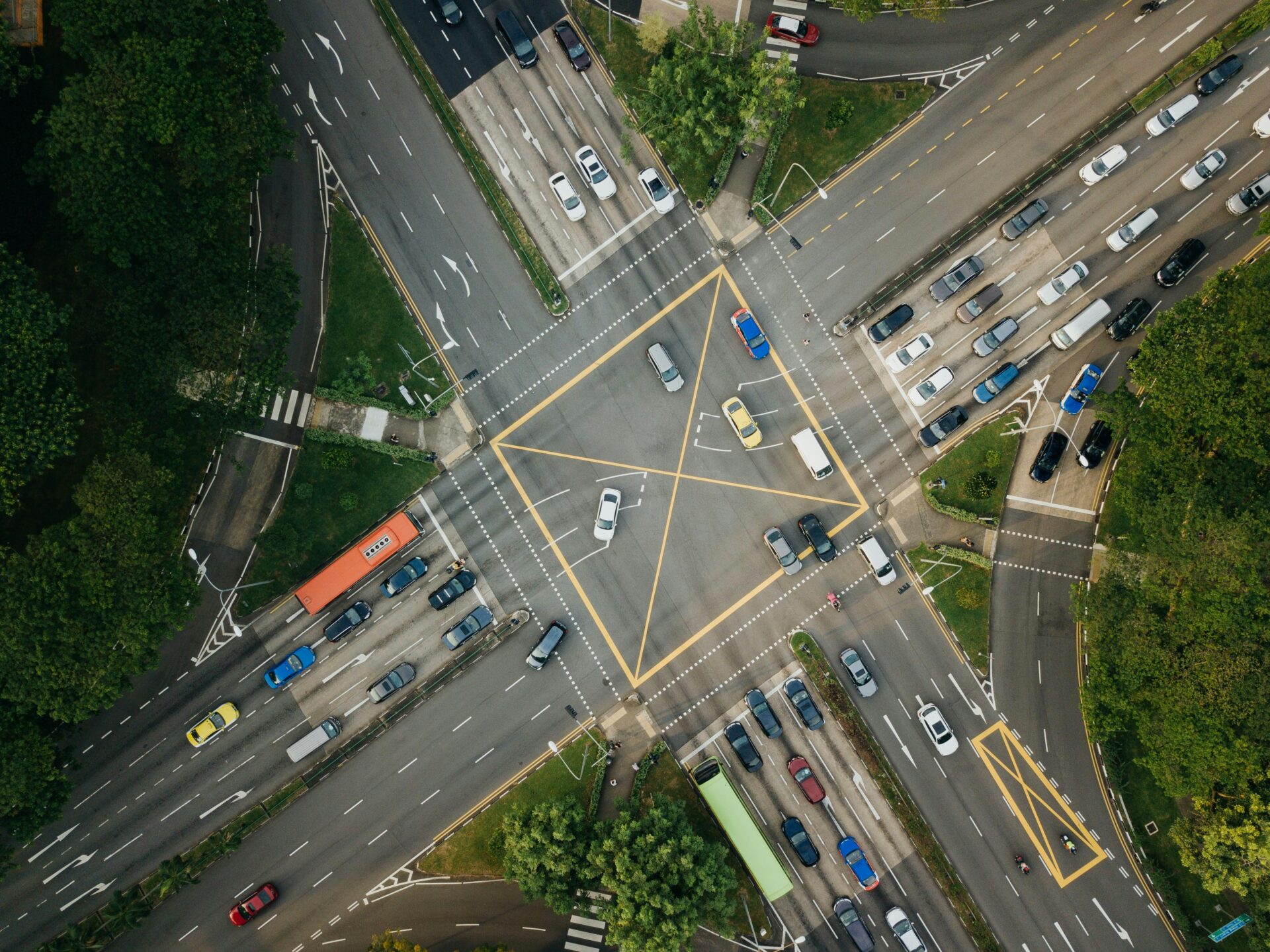
Detect traffic violations, reduce accidents and adjust traffic lights in real-time to reduce congestion. That’s the promise of AI-powered traffic monitoring.
Traffic systems are currently suffering from lack of integration, lack of automation and human error. Artificial Intelligence can change this with the use of high-resolution cameras, edge computing, and machine learning.
In this article, we’ll take you inside the technology, how it works, what tools power it, and how cities are using it to reduce congestion.
What Is AI Traffic Monitoring?
AI traffic monitoring is the application of artificial intelligence technologies to observe traffic in real-time.
Instead of relying solely on manual labor or static sensors, AI-powered systems can process live video feeds to detect and interpret vehicle behavior, allowing traffic authorities to identify violations in real time and improve road safety with higher accuracy. They can also be used to reduce congestion and plan roadway networks better.
An example of an entire system would look like this:
- Computer Vision Algorithms: Utilizing advanced image processing techniques to identify and track vehicles.
- AI Modeling: Implementing machine learning models to analyze traffic patterns and detect violations like speeding, illegal turns and traffic light violations.
- Hardware Integration: Deploying high-resolution cameras, edge computing devices and algorithms for real-time video capture, processing, and at the same time, optimize network bandwidth and cloud processing and storage.
- Orchestration Platform: A robust platform for managing the different processing components mentioned above and creating advanced monitoring, dashboards , and to facilitate enforcement actions.
Shifting From Traditional to Intelligent Systems
Traditional traffic systems depend on human intervention, pre-set timers, or sensors, which have a high chance of failing to respond to real-time changes.
On the other hand, AI-powered traffic monitoring can adjust in real-time to actual traffic conditions, preventing gridlocks and catching violations without human intervention or risking human error.
Challenges in Traditional Traffic Monitoring Methods
The main problem with traditional traffic monitoring methods is that they’re labor-intensive, making them costly in the long run. On top of that, they’re prone to errors and omissions, making it harder to enforce traffic laws.
That’s a main contributing factor for traffic management authorities who are struggling with high rates of traffic violations, accidents, and congestion.
Core Technologies Behind AI Traffic Monitoring
Tangonet Solutions partnered with a forward-thinking organization to implement cutting-edge monitoring and system detection for traffic violations. The solution comprised several key components:
Computer Vision Algorithms for Vehicle Identification and Tracking
For AI traffic monitoring, we use advanced image processing techniques to identify and track vehicles. Additionally, we implement machine learning models for analyzing traffic patterns and detecting violations, like velocity and traffic lights.
Real-Time Monitoring and Signal Optimization
For real-time monitoring and data processing, we use high-resolution cameras, edge computing devices, and edge computing algorithms. That way, we can also optimize network bandwidth, cloud processing, and storage in a way that does not compromise these platforms given the large amount of data and high processing volumes required .
If all that data were sent directly to the cloud for processing, it would consume a lot of bandwidth and possibly overload the network. Edge computing devices, custom-built algorithms together with AI tools such as tensor flow and cloud-specific solutions solve this by processing much of the data locally, right where it’s generated. These devices run edge computing algorithms to analyze video feeds in real time.
Object Detection and Segmentation for Infraction Detection
In our system, there are three phases to object tracking: detection, segmentation, and identification.
- Detection: Our algorithms can detect a car’s presence, license plate make and model, and even predict its actions with remarkable accuracy. Not only that, but they can also identify and classify vehicles within video frames with high precision.
- Segmentation: By partitioning the images into segments, our algorithms can isolate and focus on the traffic signals and their interaction with the vehicles. This allows the monitoring system to determine whether a vehicle has committed a breach or a violation.
- Identification: By following the trajectory of each vehicle across frames, our algorithms can identify any committed violation, like crossing an intersection at the red light. They can also determine who committed the violation by capturing the license plate. The continuous tracking helps establish a pattern and understand the driver’s behavior.
Practical Applications in Urban and Highway Settings
All this talk about object detection and edge computing seems nice, but how is the system used in urban and highway settings? Let’s see!
Monitoring Vehicle Movement and Capturing License Plates
Our AI system can automatically identify and track moving vehicles across lanes, even in dense traffic, and accurately read license plates.
This helps pinpoint violations and maintain detailed records for legal enforcement, making the entire process of traffic monitoring easier and more efficient.
Managing Congestion and Enhancing Road Safety
To optimize flow and reduce unnecessary idling, our AI-powered system can detect bottlenecks in real-time and send insights to the traffic monitoring centers, enabled with certain alerts based on user-defined criteria. The benefits of doing so are endless, including saving time, lowering emissions, and lowering the risk of accidents.
Highway Monitoring and Critical Infrastructure Surveillance
While managing congestion and city traffic is a major benefit of this system, it also excels in highway monitoring and infrastructure surveillance.
AI monitoring provides 24/7 surveillance on highways and around critical zones like bridges and tunnels.
The system can detect wrong-way driving or stalled vehicles, which are common on highways. When this happens, it can provide insights to alert authorities immediately, contributing to faster response times.
Devices and Tools That Power AI Monitoring
AI-powered traffic monitoring relies on an integrated stack of hardware and software components, where each element has a specific role. Here are the devices and tools we use to power our AI monitoring system:
High-Resolution Smart Cameras
The cameras act as the system’s eyes, and they’re often placed at strategic intersections and entry points to capture high-definition footage of traffic activity. Many of these smart cameras support night vision and operate in all weather conditions for uninterrupted monitoring.
Edge Computing Devices
To process video data, intelligent edge computing devices are installed close to the camera infrastructure. Instead of sending all footage to a central server, these devices the algorithms built and AI libraries analyze video streams locally, reducing latency and saving bandwidth.
Traffic Sensors
While cameras and edge computing devices do most of the visual analysis, traffic sensors provide non-visual data that improves the system’s accuracy.
Central Software Dashboard
All the filtered data from cameras and edge devices is fed into a centralized dashboard accessible by traffic authorities. Using this dashboard, operators can view real-time traffic feeds and access historical data when needed.
From Concept to Reality
The Tangonet Solutions project follows a structured implementation process that takes it from concept to reality. Here’s how everything goes from discussions with the client to training the client’s team:
Requirement Analysis to Understand Client Needs
The first step we take is to carry out a detailed discussion with the client to understand their specific needs and challenges.
After that, we start incorporating hardware and software components to build a proof of concept (if required) with the user-specific functional aspects. Depending on how much the users requirements deviate from the standard systems, we can adapt it (either through paramentrization and/or customized modules) and tie them into the open-source and cloud-based tools. Because of that, they’re economically efficient and scalable.
Development, Deployment, and Training
After designing the system, we begin to build and test the system tailored to the user-defined traffic scenarios, thresholds and video capture criteria. After the PoC or initial project phase we begin the deployment phase, where we install cameras and edge devices and integrate them with the central software platform.
When development and deployment are done, we start doing comprehensive training for the client’s team, so they can operate the system and maintain it efficiently later on.
Enhanced Accuracy With Over 95% Detection Rate
When taken from concept to reality, our system achieved a detection accuracy of over 95%, significantly reducing false positives. The automated monitoring works nonstop, allowing for 24/7 operation and improving enforcement capabilities.
Not only that, but the system also eliminates the need for manual monitoring, resulting in substantial cost savings.
Naturally, timely detection also contributes to a decrease in traffic accidents and violations, which is the whole point of our system.
Client’s Feedback on Improved Traffic Management and Safety
The clients who we developed our AI-powered system with have reported better traffic flow and reduced violation rates within only weeks of deployment. They stated that their partnership with Tangonet Solutions has entirely transformed their traffic management approach. They have even used some of the video feeds as marketing material to their communities as a means of showing them the efforts put in place to create a safer community.
Contribution to Smart City Initiatives and Urban Planning
A well built AI traffic system can also play a huge role in broader smart city goals. It collects high-quality, real-time traffic data, which allows for better zoning strategies and long-term planning. It also allows for more efficient sustainability efforts in reducing carbon emissions and building safer roads.
While law enforcement agencies are able to issue timely fines, the system goes far beyond just another revenue collection method. City planners gain access to reliable data that allows for better infrastructure decisions, optimizing investment in public works projects and creating a safer environment for all users of the public roadway networks.
Custom AI Traffic Systems Built With Global Expertise
Whether for a small city intersection or a national highway network, at Tangonet Solutions, we can create custom solutions tailored to local infrastructure and government regulations.
We have the necessary experience in computer vision, AI, and large-scale deployments to tailor solutions for any organization we partner with.
Final Thoughts: The Transformative Power of AI in Traffic Systems
AI traffic monitoring isn’t just about catching red-light runners, but it’s about creating smarter and safer cities.
When the ability to track and respond to traffic behavior in real time is available, these systems can reduce human error and support long-term urban planning.
Future Possibilities in Smart Infrastructure
As technologies evolve daily, AI traffic monitoring becomes more powerful. In the future, we’re hoping to see deeper integration between traffic systems and fully adaptive urban infrastructure.