
Nearshore AIOps Services
Practical AIOps Support for Real Production Systems
Tangonet’s Nearshore AIOps Services help MSPs, SIs, and SaaS teams turn noisy, fragmented telemetry into faster detection, calmer incident response, and smarter capacity and scaling decisions.
Our engineers work at the intersection of observability, DevOps, and machine learning, layering analytics and smart automation on top of the tools you already use—so your team spends more time solving real problems and less time drowning in alerts.
Tangonet has provided different technology team solutions in data, development and DevOps – consistently providing high-quality resources in all areas. They have now added a layer of AIops to help us make our observability data even more intelligent. We have worked with them very successfully to help us and our clients grow through flexible service models
CEO
Specialized Software Company
AIOps: Making Sense of Your Operations Data at Scale
Modern production environments generate huge volumes of metrics, logs, traces, and events—but without structure and analysis, that data never really turns into actionable insight. AIOps focuses on ingesting this telemetry, enriching it with context, and applying analytics to spot patterns, anomalies, and trends that tend to get lost in the day‑to‑day noise.
This helps ensure the highest level of service and application availability and performance. Done well, AIOps sits on top of your existing monitoring and observability stack to reduce alert fatigue, highlight what truly needs attention, and point responders toward likely causes.
AIOps is not “AI that runs operations for you.” It’s a set of data and automation practices that make your current tools and teams more effective when production is under pressure.

Core AIOps Capabilities We Deliver
We help you collect and standardize data from your infrastructure, applications, and tooling, often using open standards—like OpenTelemetry, where appropriate—so downstream analytics and automation have clean, coherent inputs.
We configure and tune event pipelines so related alerts are grouped, duplicate noise is reduced, and your on‑call engineers see fewer, more meaningful incidents instead of hundreds of near‑identical signals.
We enrich incidents with the context responders actually need—recent changes, related services, past similar issues—and use analytics to improve triage, routing, and runbook selection, helping teams shorten mean time to detect (MTTD) and mean time to recover (MTTR).
We analyze historical telemetry to highlight usage patterns and trends, so you can plan capacity for busy periods, spot emerging performance bottlenecks, and make better-informed decisions about infrastructure investments and scaling.

AIOps Outcomes You Can Expect With Tangonet
When you bring Tangonet into your operations stack, the aim isn’t to replace your team with AI. It’s to give them better signal, better context, and better levers for keeping systems healthy under load. We focus on outcomes that matter to MSPs, SIs, and SaaS teams: fewer surprises, faster recovery, and more time for proactive work.
Because our nearshore cloud and DevOps engineers integrate AIOps practices into their day‑to‑day work, we don’t just generate insights and dashboards—we help wire those insights into your existing workflows and, where appropriate, into safe, targeted automation.
Use analytics on top of your observability data to detect issues earlier, triage them more quickly, and give responders better context, so MTTR comes down without adding more people to every incident.
Cut back on alert storms and unactionable notifications by correlating events and tuning thresholds, so your on‑call engineers see a manageable stream of meaningful incidents instead of a wall of noise.
Use capacity and performance trends from real telemetry to plan for new customers, new regions, and major launches with fewer surprises and more confidence in your infrastructure decisions.
Reduce fire‑fighting and manual triage so your team can spend more time on improvements that actually move the needle, such as hardening critical services, paying down technical debt, and shipping new features.
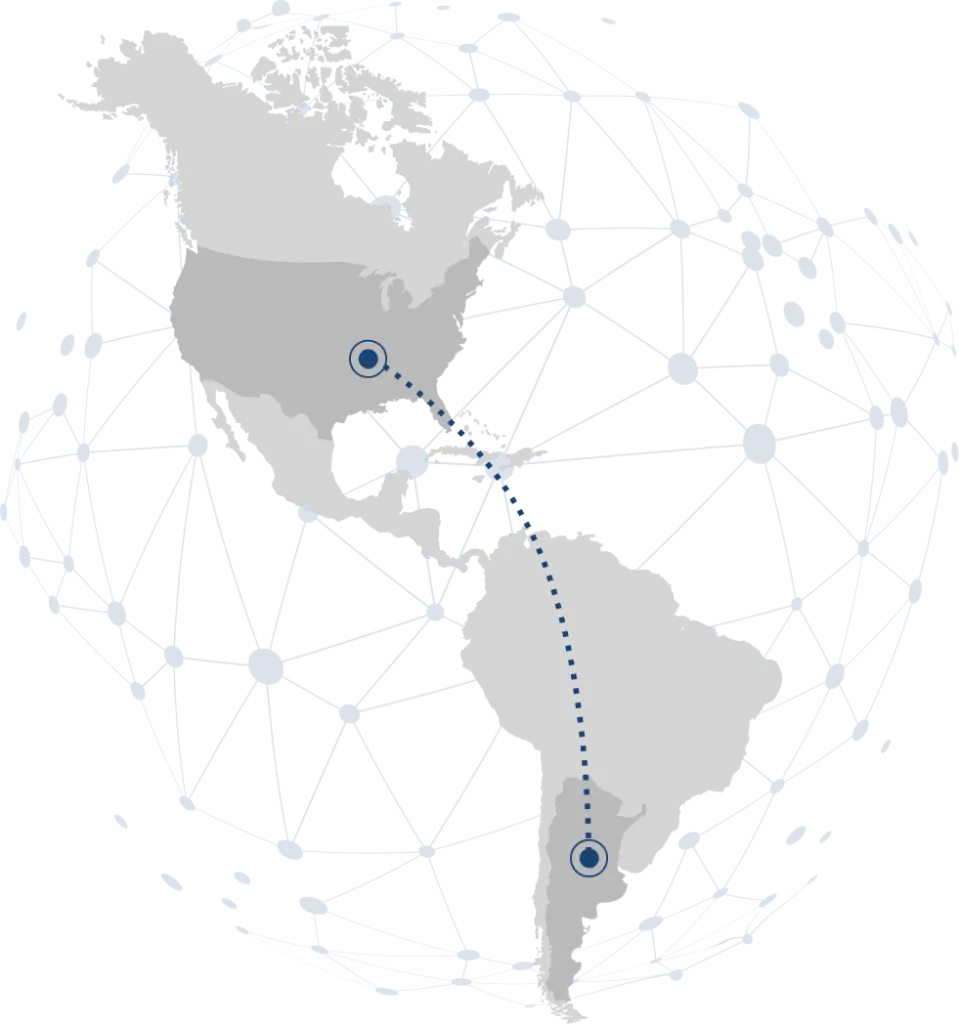
US‑Led, Argentina-Powered AIOps Support
Tangonet’s US‑based leadership team combines 70+ years of technology services experience with deep roots in Argentina’s tech ecosystem. Having sat in the same seat as CIOs, IT directors, and technical founders, we understand the pressure technology leaders face—and how to leverage the strengths of LATAM engineering talent.
Our nearshore cloud engineers, specializing in AIOps, work in US business hours, plug into your existing tools and workflows, and are backed by senior support and oversight. You gain the benefits of Argentina’s talent and time-zone alignment while working with a partner that understands the stakes around performance, uptime, SLAs, and customer trust.

Why Nearshore AIOps?
AIOps is most valuable in environments where incidents are frequent, telemetry is fragmented across tools, and teams are stretched thin—a common situation for MSPs, SIs, and SaaS providers. Nearshore AIOps support lets you add the specialized skills needed to clean up data, configure analytics, and wire insights into workflows, without waiting months to build that capability in‑house.
Because Tangonet’s teams operate in (or close to) your time zone, you can collaborate on incident reviews, tuning sessions, and planning work during your normal day. That makes it much easier to iterate on AIOps configurations, adjust what “good” looks like as your systems evolve, and avoid multi‑day lag between discovering an issue and refining the detection or automation around it.
AIOps Solutions For Every Project
Book a discovery call, and we’ll meet to discuss your operational challenges and how AIOps could realistically help in your environment.
Our technical leads meet with your engineers to review your current tooling and telemetry maturity—what you’re collecting now, where, and in what shape—and to understand incident patterns, existing dashboards, and any AIOps or automation features already in place.
Together, we choose the right engagement model (such as staff augmentation, fractional/pod, team‑with‑liaison, or project‑based) and, if needed, run a short planning sprint to produce a concrete backlog and phased plan for AIOps and observability improvements.
We finalize scope, pricing, and success criteria (for example: noise reduction targets, MTTR goals, or specific use cases like capacity planning), align on tools and access, and, for embedded roles, present vetted engineers so work can start quickly.
We execute within the agreed working rhythm, maintain a regular feedback loop, and adjust the engagement over time so it continues to address your real‑world incidents, systems, and priorities.
Frequently Asked Questions
AIOps (Artificial Intelligence for IT Operations) is an approach that uses data, analytics, and automation on top of your monitoring and observability stack to improve how you detect, understand, and respond to operational issues. It focuses on ingesting telemetry, spotting patterns and anomalies, and triggering the right actions or workflows—not replacing your team.
DevOps is about how you build and ship software: culture, CI/CD, infrastructure as code, environment consistency, and shared ownership between development and operations.
AIOps is about how you operate and improve production systems using data: it sits on top of your monitoring and observability practices, using analytics and automation to reduce noise, speed up detection and triage, and support decisions about reliability and capacity in the infrastructure, data, and application environments.
In practice, they’re complementary: DevOps gets changes into production safely, AIOps helps keep production healthy and easier to operate.
Using nearshore talent means working with engineers in a nearby region and time zone so you can collaborate in real time. Tangonet’s teams are based in Argentina and work primarily in US business hours, with US-based leadership. That gives you many of the cost and talent advantages of a different market, while still being able to jump on incident reviews, tuning sessions, and planning calls during your normal day without overnight delays.
Not necessarily. Many teams start by improving how they collect and structure telemetry and by using analytics and automation features in tools they already own. In other cases, it can make sense to introduce additional platforms or services—but we begin with your current stack, data, and goals, not with a predetermined tool choice. The first wins often come from cleaning up what you have and wiring it together more intelligently.
AIOps is especially valuable for MSPs, SIs, and SaaS/product teams that run complex, distributed systems with frequent changes, strict SLAs, and a lot of alerts or incidents.
If your teams are spending too much time triaging noisy alerts, fighting recurring issues, or juggling multiple monitoring tools without a clear picture, AIOps can help by improving signal, context, and workflows.
Most organizations see value fastest when they start with a few specific, bounded use cases—for example, reducing alert noise for a critical service, improving MTTR for a key customer-facing flow, or forecasting capacity for a known busy period.
Those kinds of efforts can show results in weeks, not years. From there, AIOps can be expanded to more services and use cases as patterns, data quality, and internal confidence improve.
Tangonet combines disciplined cloud engineering practices with senior oversight. We start with clear goals and a limited, concrete scope; validate the reality of your environment; and implement AIOps improvements in phases, so you can see and measure impact.
Our nearshore engineers are backed by experienced technical leads who stay involved in discovery, design, and critical decisions, and we document what we build so you’re not dependent on a single person or tool.
We usually start with the smallest effective footprint—such as a focused AIOps project or a fractional pod—so you can prove value without overcommitting. From there, we can add capacity or broaden scope in a matter of days or weeks, depending on the skills required and your priorities.
Scaling down is handled with appropriate notice and clean handoffs so you don't lose continuity.